
The midpoint is the right time to examine the plan with fresh evidence. By Week 3, novelty is no longer carrying the routine, and small compromises made during the first half may be easier to see. A useful midpoint review asks whether the arrangement is still comfortable, consensual and compatible with work, sleep, hygiene and ordinary responsibilities.
Days 15–21 are not a reason to intensify the challenge automatically. They are a decision window. Keep what is working, repair what is creating friction and remove anything that relies on wishful thinking. Use the 2026 calendar for dates, while this guide handles the review that the calendar cannot do for you.
Start With Evidence From the First Half
Review notes, messages and actual interruptions rather than relying on a general feeling that the month has gone well or badly. Count how often the schedule changed, when cleaning took longer than expected, which clothing caused rubbing and whether sleep or concentration suffered. One isolated inconvenience may not require a redesign; the same issue appearing three or four times deserves a specific response.
Include positive evidence. A predictable evening routine, a reliable local key arrangement or a check-in that takes five minutes may be worth preserving. The purpose is to build a shorter list of dependable practices. If the original plan contained ambitious extras that were never used, remove them instead of carrying them as unfinished obligations.
Recheck Fit, Skin and Equipment Condition
Inspect the points where the ring, cage and lock meet the body. Look at skin after normal movement and after cleaning, not only while standing still. Confirm that urination and drying remain manageable. Inspect seams, hinges, lock channels and printed surfaces for roughness, cracks, corrosion or distortion. Equipment that has changed should be taken out of use until it can be evaluated safely.
Pain that persists, numbness, swelling, unusual color, broken skin or trouble urinating requires removal rather than another adjustment attempt while worn. Seek qualified medical care for severe or continuing symptoms. The monthly goal never outranks circulation, skin integrity or the ability to remove the device promptly.
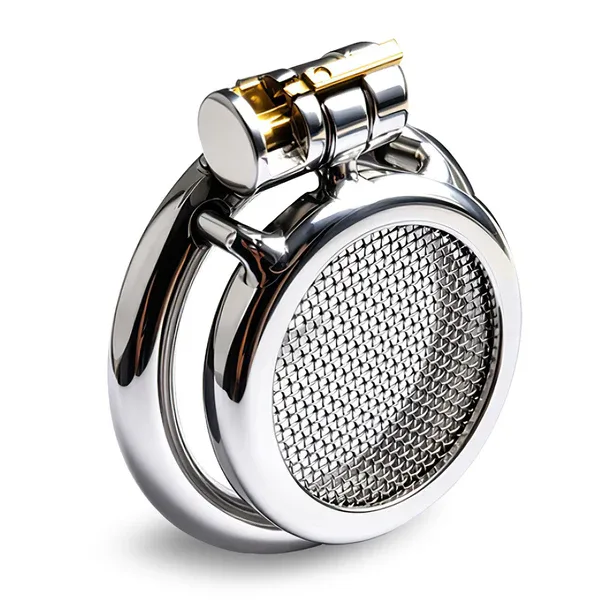
Flat Stainless Steel Star-Mesh Chastity Cage
A midpoint review may reveal that front profile and ring shape matter more than expected. This stainless steel star-mesh model lists both flat and arc ring styles in 40, 45 and 50 mm sizes, with a 35 mm central opening. Those specifications make it useful for a structured comparison with the device already worn. Compare ring geometry and measurements on paper first, then use a brief fitting period rather than changing equipment midweek without a test.
Review the Rules That Actually Got Used
Mark each rule as useful, neutral or disruptive. Useful rules support the purpose of the challenge and are easy to understand. Neutral rules may be harmless but unnecessary. Disruptive rules create repeated uncertainty, encourage delayed removal or require more attention than either person agreed to give. Delete or rewrite the disruptive items in plain language.
A rule change should state when it begins and how it will be reviewed. For example: “For the next three days, the evening check-in moves to 8:30 p.m.; if either person is unavailable, the local fallback applies.” This is clearer than saying you will try to communicate better. The existing article on changing Locktober rules gives a fuller process for documenting consent and revisions.
Decide Whether an Equipment Change Is Worth It
Changing devices at the midpoint introduces a new fit, new cleaning routine and new failure points. Make the change only to solve a defined problem, such as an incompatible length, ring profile or material preference. Write down the problem first, then compare exact dimensions and package contents. A product that looks smaller in a photograph may not be smaller in the measurement that matters.
Plan a normal short trial outside a long wear window. Practice locking and local removal, sit, walk, use the bathroom and clean the device. If the trial produces uncertainty, return to a known safe setup or pause. Week 3 is too late to treat an unfamiliar device as though the first two weeks proved it suitable.
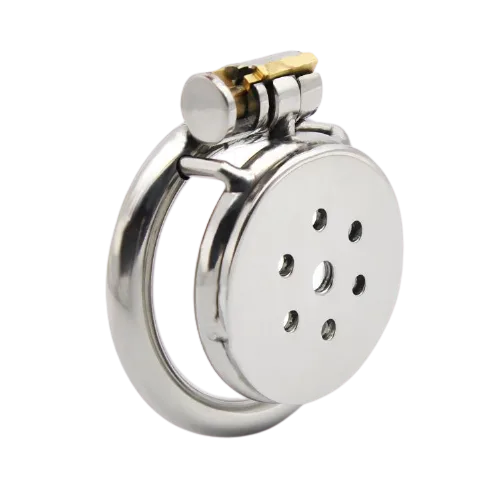
The Flat Gatling Chastity Cage
The Flat Gatling is relevant when the midpoint problem is front projection under clothing. Its page describes a stainless steel flat design, two listed cage diameters and base-ring choices of 40, 45 and 50 mm. The source measurements contain an inconsistent inch conversion, so compare the millimeter figures and contact the seller if needed. Treat it as a low-profile candidate to measure and test, not as an automatic comfort upgrade.
Reset Communication for Days 15–21
Ask whether check-ins are giving useful information or merely proving compliance. A practical midpoint reset may reduce the frequency while improving the questions: Is there any pain or skin change? Is the device clean and dry? Does tomorrow include travel, exercise or a long seated period? Has consent or interest changed? These questions reveal decisions that need attention.
Partners should also review privacy. Delete proof images that no longer need to be stored, confirm who can access shared accounts and avoid combining intimate records with work calendars or family cloud storage. Solo participants can simplify their journal to the same four or five fields. Consistency matters more than producing a detailed diary every night.
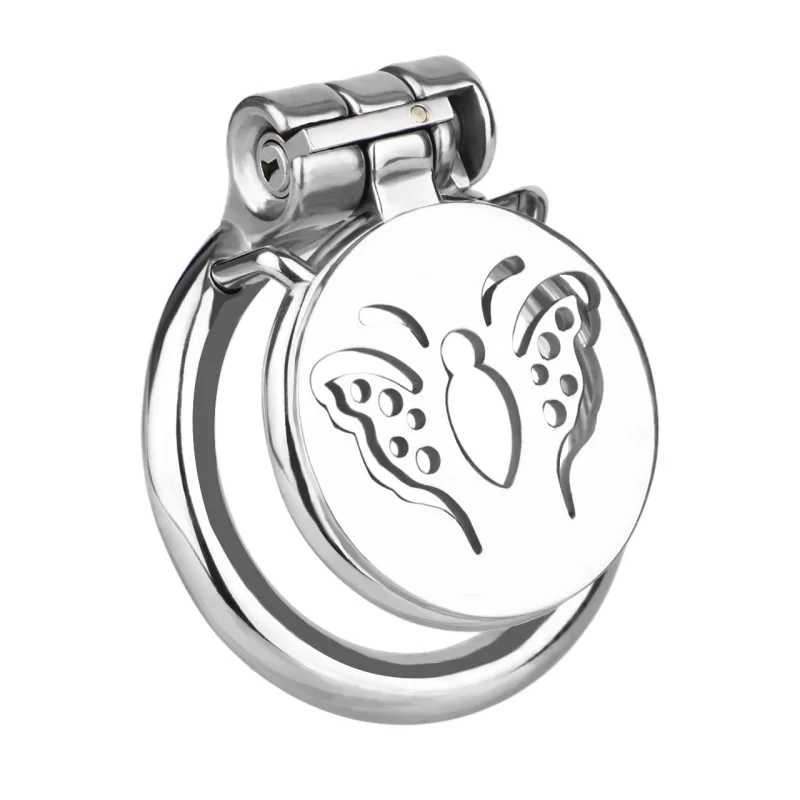
Butterfly Flat Chastity Cage
For someone comparing another low-profile metal shape at mid-month, the Butterfly Flat cage offers a different geometry from a circular flat design. Its listing identifies 304 stainless steel, a 69 mm length, a 23 mm width and ring options from 40–55 mm. Verify how those dimensions are defined before ordering. The decorative outline is secondary; the useful comparison is whether its measured shape addresses the specific clothing or projection problem found in your review.
Set a Modest Week 3 Target
Choose one outcome for the week: a stable cleaning schedule, fewer missed check-ins, better sleep planning or a confirmed equipment decision. Avoid stacking all four. Record a baseline on Day 15, test one adjustment on Days 16–18, review it on Day 19 and use Days 20–21 to decide whether it continues. A short experiment creates better information than changing several variables at once.
Keep the emergency unlock plan unchanged unless the review found a genuine access problem. If motivation drops, consult the motivation guide before adding rules. A successful midpoint reset is one that makes the remaining days clearer and safer, even when that means a pause, a shorter schedule or ending the challenge.