
Locktober at work should remain almost invisible to the workday. You should be able to sit, walk, concentrate, use the bathroom and handle schedule changes without drawing attention or negotiating with a challenge rule. If participation becomes the main event in the office, the plan is too demanding for that setting.
Discretion begins before leaving home. Test the routine privately, choose ordinary clothing, carry reliable removal access and decide which work situations automatically become breaks. The goal is not to prove that you can tolerate every shift or meeting. It is to build a schedule that respects both privacy and normal responsibilities.
Decide Whether Workdays Belong in Your Challenge
You can keep Locktober to evenings, days off or selected weekends. A workplace session is optional, even in a month-long plan. Consider the length of the day, privacy, physical activity, uniform requirements, shared facilities and whether you can remove promptly.
If these variables are unfamiliar, start outside work. The guide to flexible 31-day participation explains why selected days can still form a coherent challenge. A work exclusion written in advance is a rule, not a loophole.
Test an Ordinary Day at Home First
Recreate the conditions you can: wear the same clothes, sit in a similar chair, walk for the usual commute time and follow the expected bathroom schedule. A ten-minute standing test does not show what several hours at a desk or on your feet will feel like.
Use a short trial and finish while you still have privacy to inspect, clean and adjust. Note any posture changes, repeated distraction or pressure that increases over time. The Locktober preparation guide can help turn those observations into a lower-risk schedule.
Clothing and Profile Matter
Choose familiar clothes that allow normal movement. Check waistbands, seams and the way fabric sits when you stand, bend and sit. Tight clothing can create pressure even when it appears discreet; very loose clothing can move in ways you did not notice during a static mirror check.
Test the whole outfit, including underwear, trousers, belt and any uniform layers. Sit in the chair you actually use and climb stairs if that is part of the day. Bring a change of clothing when practical. Changing an outfit is a routine adjustment, not a public explanation.
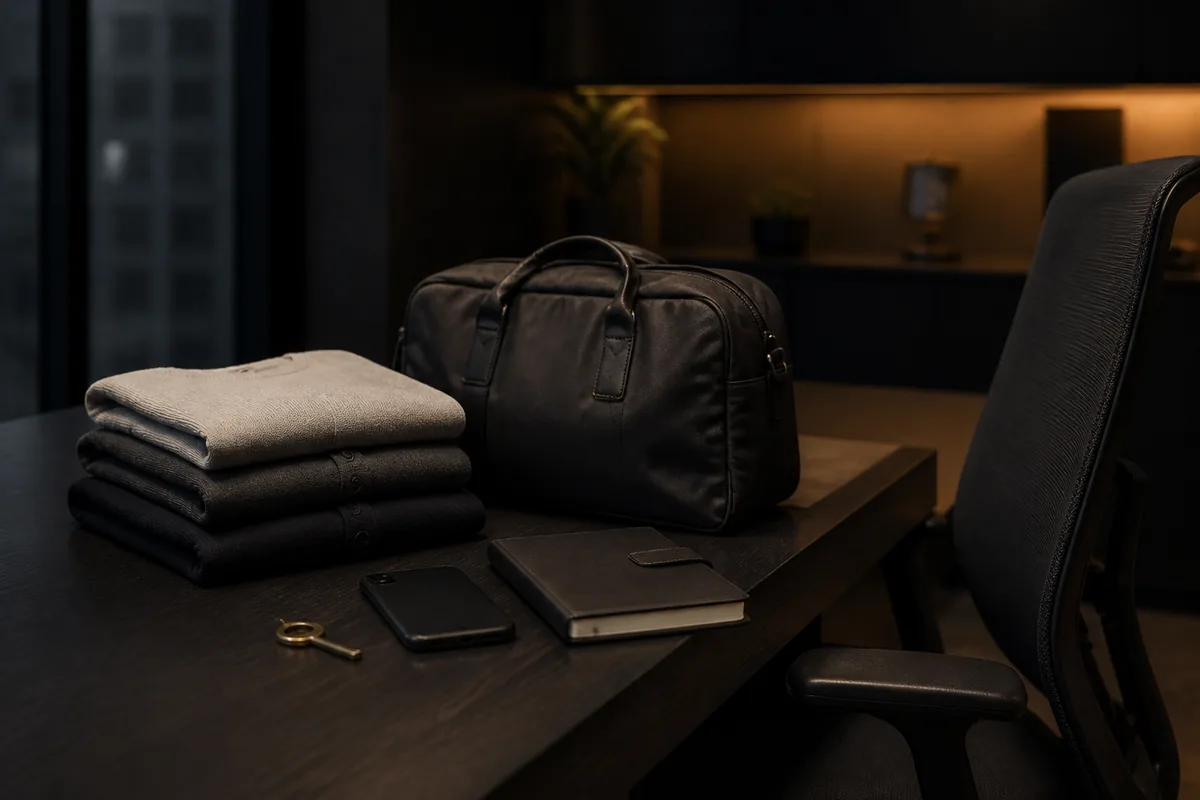
Plan the Commute Separately
Driving, cycling, walking and public transport place the body in different positions. Test the actual duration gradually. A routine that works at a desk may not work in a car seat, and a comfortable walk around the home does not predict a crowded train platform.
Leave extra time on the first trial day so you are not forced to ignore a problem to avoid being late. Keep the removal method on your person or in an immediately accessible bag. Do not place the only key in a vehicle, locker or location you cannot reach during the commute.
Use Scheduled Private Checks
Connect brief checks to normal breaks: after arrival, at lunch and before the journey home. Confirm that movement remains normal, pressure has not increased, skin is not becoming irritated and bathroom use is manageable. You do not need to monitor constantly or create a visible routine.
Choose a private location that already fits the workday. Do not take photos, leave notes on a shared calendar or use notifications that expose personal information. A neutral reminder such as “break” is enough if you need one.
Desk Work and Long Sitting
Long sitting can reveal issues that short movement does not. Notice whether you lean, shift or avoid a normal posture. Take ordinary movement breaks for the same reasons you would on any workday. A challenge should not require you to remain unnaturally still.
If discomfort builds between checks, use the removal plan rather than waiting for the next scheduled time. The calendar is not more important than what is happening now.
Active Jobs and Protective Clothing
Jobs involving lifting, climbing, running, heat, machinery, protective clothing or rapid response require a separate decision. Do not assume a device or routine tested at home is compatible with those conditions. Movement restrictions and delayed private access can make workplace participation impractical.
Choose an after-work version when the job cannot support checks and prompt removal. This keeps professional safety and performance outside the challenge.
Meetings, Travel and Unexpected Overtime
Mark days with presentations, off-site work, medical appointments or long meetings. Decide in advance whether they are breaks. For unexpected overtime, use a simple fallback: remove at the normal end time if possible, or end the session as soon as private access is available.
Silence from a partner or keyholder should not extend a work session. Agree on that rule before Day 1. The couples guide helps define check-ins that do not depend on constant availability.
Low-Profile Designs to Compare for Workdays
The Flat Gatling Chastity Cage
For a workday, a useful comparison focuses on profile, material and the stated ring choices while keeping workplace privacy and prompt removal access intact. Its stainless-steel body uses a short, flat profile, and the product page lists 40, 45 and 50 mm ring diameters. Test the complete outfit and an ordinary seated or active period privately before including it in a workday rule.

Flat Stainless Steel Star-Mesh Chastity Cage
For a workday, a useful comparison focuses on profile, material and the stated ring choices while keeping workplace privacy and prompt removal access intact. Its stainless-steel woven front comes in flat-ring and arc-ring variants, with 40, 45 and 50 mm ring choices listed on the page. Test the complete outfit and an ordinary seated or active period privately before including it in a workday rule.

Butterfly Flat Chastity Cage
For a workday, a useful comparison focuses on profile, material and the stated ring choices while keeping workplace privacy and prompt removal access intact. This stainless-steel model uses a flat butterfly-shaped front and lists 40, 45, 50 and 55 mm ring options. Test the complete outfit and an ordinary seated or active period privately before including it in a workday rule.

Keep Workplace Privacy Non-Negotiable
You do not owe coworkers, managers or clients an explanation. Avoid visible accessories, shared-device messages and conversations that invite disclosure. If a security process, shared changing area or health appointment could expose the arrangement, schedule a break.
Discretion also means not involving another person without consent. Do not make colleagues part of a private dynamic through dares, coded behavior or deliberate risk of discovery.
Know When the Workday Ends the Session
Remove promptly for pain, numbness, unusual swelling, discoloration, skin injury, difficulty urinating, damaged equipment or another concern. Also stop when the schedule prevents cleaning, normal movement or access. Seek appropriate help when a symptom persists or causes concern.
Record the practical reason without turning it into a moral judgment. “Unplanned site visit; ended at noon” gives you information for the next week.
Keep a Neutral Workday Backup Kit
A small private pouch can hold the release method, ordinary cleaning supplies and a change of underwear without advertising the challenge. Keep it with belongings you control, and check it before leaving home. Do not store intimate notes or revealing labels in a shared desk or locker.
The kit is useful only if you can reach it. If workplace rules prevent carrying the necessary access, exclude the workday from the plan.
Build a Workday Rule You Can Remember
A useful rule might be: “Workday participation happens only after a private test, with access in my bag, checks at lunch and before commuting home, and automatic removal for overtime or restricted privacy.” Adapt the sentence to your real job.
Use the Locktober calendar to identify demanding dates, then return to the Locktober31.com homepage to choose a challenge path that leaves room for work. The most discreet plan is the one that never asks the workplace to accommodate it.