
A cage that seems acceptable while standing can feel different after forty minutes in a desk chair. Hip angle, trouser seams, chair depth and the position of the base ring all change when you sit. For Locktober, the useful goal is not to discover a posture that lets you ignore discomfort all day. It is to arrange the desk, clothing and break schedule so you can notice problems early and remove the device when a safety threshold is reached.
Test desk sitting before relying on it for a full workday. The broader Locktober at work guide covers privacy and scheduling; this article focuses on the mechanics of sitting, standing and checking fit.
Start With the Chair, Not Your Posture
Sit all the way back and check whether the front edge of the seat presses upward. A deep chair can force the pelvis to roll back, while a hard waterfall edge may create pressure exactly where the device changes angle. Adjust seat height so both feet rest securely and the knees are near hip level. If the chair allows it, reduce seat depth or add back support so you are not sliding forward to reach the floor.
Do not solve pressure by holding an exaggerated upright pose for hours. That creates a second problem in the back and hips. Use a neutral position you can maintain without bracing. Move the keyboard and monitor toward that posture. A setup that requires leaning forward continuously can shift clothing and the device even when the chair itself is comfortable.
Check Fit in Three Seated Positions
A pre-October test should include an upright work position, a relaxed position and the forward lean used to reach a bag or tie a shoe. Stay in each briefly, then stand and inspect. Notice pinching at the base ring, pressure from the lock, skin caught between components or a cage angle that changes sharply. Repeat the test in the actual underwear and trousers planned for work.
The device should also remain removable using the local method. A keyholder arrangement does not justify carrying the only key to another location. Review the emergency unlock plan and keep the agreed release method accessible at the desk, during a commute and in any meeting room where you may spend a long period.
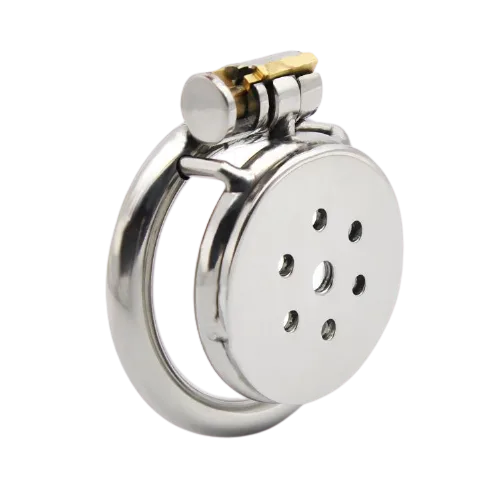
The Flat Gatling Chastity Cage
For desk use, the Flat Gatling is relevant because its stainless steel front is designed with a very low profile. Its page lists 40, 45 and 50 mm base-ring options plus two cage diameters, though one inch conversion on the page is inconsistent. Use the millimeter measurements when comparing. A flatter front may reduce projection under trousers, but ring angle, total weight and the seated fit still need a short real-chair test.
Choose Clothing That Can Move With You
Underwear should keep the device stable without pulling it hard against the body. Try the full work outfit while sitting, walking and climbing stairs. Tight seams can cross the lock or cage edge; loose fabric can bunch underneath. Trouser rise also matters. A low rise may pull across the front when seated, while a higher rise may provide more room without requiring a larger size overall.
Carry one tested alternative, such as different underwear or trousers, when the workday is long. Changing clothing is a better response than repeatedly shifting the device through fabric. Avoid improvised padding that traps moisture or hides pressure. The Locktober comfort guide includes broader clothing and daily-routine considerations.
Use Movement Breaks as Inspection Points
Set breaks according to the work, not an arbitrary endurance target. Stand for a minute between calls, walk to refill water and use lunch as a longer check. After standing, notice whether pressure resolves immediately or lingers. A reminder can help during focused work, but it should prompt observation rather than force you to wait when something already feels wrong.
During a private bathroom break, check alignment and make sure skin is not folded or caught. Dry moisture rather than returning directly to the chair. If you cannot perform a basic check privately at work, plan a shorter wear period or leave the device off for that day. Discretion should never depend on delaying hygiene or ignoring a symptom.
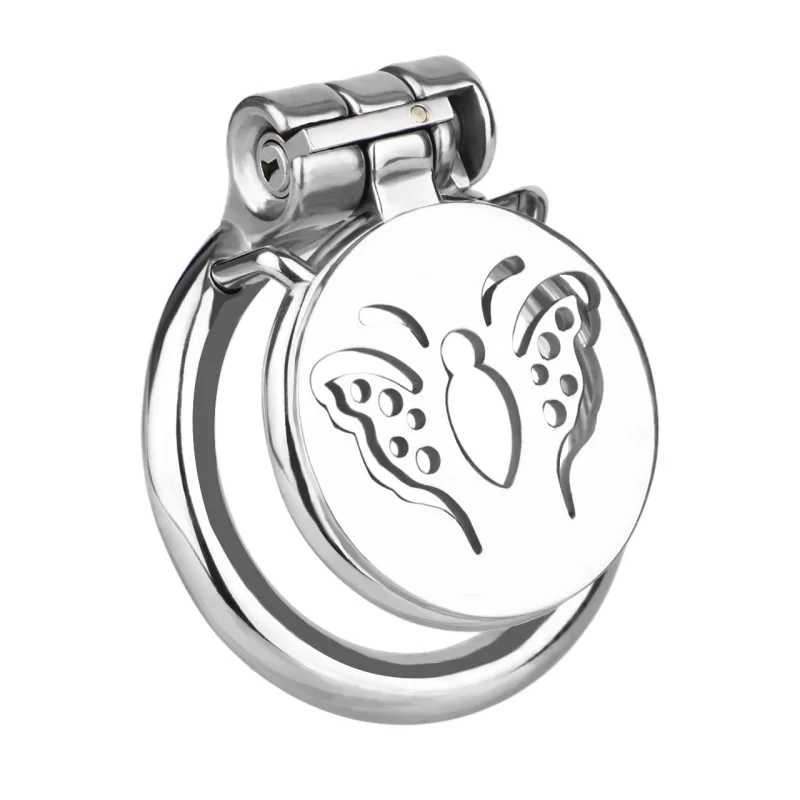
Butterfly Flat Chastity Cage
The Butterfly Flat cage gives desk workers another low-profile metal shape to compare. The live listing describes 304 stainless steel, a 69 mm length and 23 mm width, with rings from 40–55 mm. Those figures help you compare the front outline and ring choice with your chair test. Its decorative shape should not distract from the practical questions: where the edge sits while seated, how weight is supported and whether cleaning remains manageable.
Know Which Sensations Mean Stop
A posture change should not be needed to restore normal color, temperature or sensation. Persistent pain, numbness, swelling, unusual discoloration, broken skin or difficulty urinating means you should stop wearing the device and remove it. Do not wait for the end of a meeting or a partner’s reply. Seek qualified medical care when symptoms are severe or do not resolve after removal.
Also stop using equipment that develops a rough edge, crack, bent ring or unreliable lock. A workday is a poor place to diagnose a mechanical failure. Keep a non-device fallback for the challenge, such as the accountability approach in doing Locktober without a cage, so safe removal does not feel like abandoning the month.
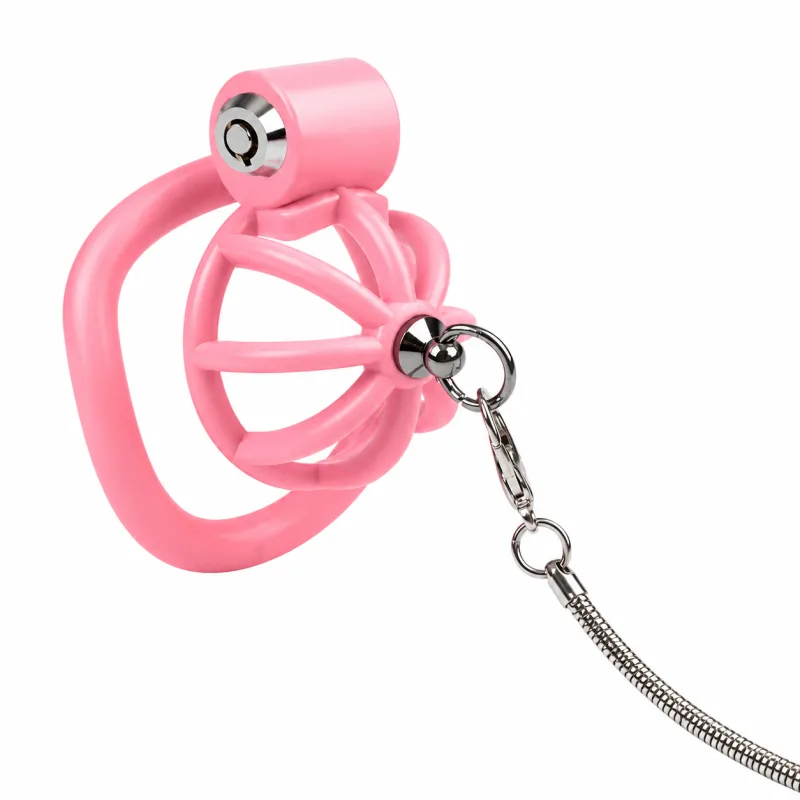
Dog Paw Low-Profile ABS Chastity Cage
For someone comparing lighter low-profile options after a desk trial, the Dog Paw ABS cage is a relevant shortlist item. Its product images show a compact perforated front and the listing includes multiple rings. Verify the exact current measurements before choosing a size. ABS may feel lighter than steel, but material alone cannot predict seated comfort; test ring pressure, clothing movement and bathroom access during a brief home session first.
Build a Desk-Day Plan Before October
Run a two-hour trial on a normal work setup, followed by a half day only if the first test is uneventful. Record the chair, outfit, break timing and any pressure location. Change one variable at a time. If a cushion helps, confirm that it does not raise the knees or tilt the pelvis in a way that creates pressure elsewhere. The goal is a repeatable arrangement, not a collection of temporary fixes.
For the actual month, decide in advance which days are unsuitable: long travel, back-to-back meetings, a medical appointment or any shift without private bathroom access. A successful desk routine preserves concentration and normal movement. If the device repeatedly becomes the main event of the workday, shorten the schedule, change the setup after careful testing or use a non-device version of the challenge.